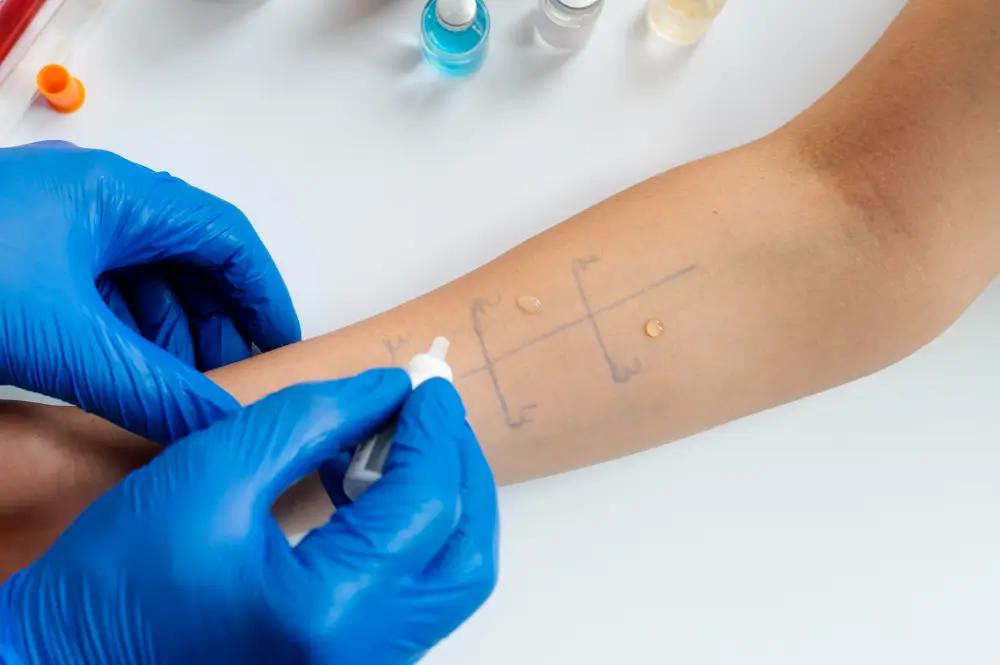
Skin prick and intradermal allergy testing are safe and reliable ways to identify the specific environmental allergens causing symptoms such as sneezing, nasal congestion, itchy or watery eyes, and asthma flare-ups. These tests help determine the root cause of symptoms and guide effective, long-term treatment.
How the tests work:
Small amounts of common allergens (pollen, dust mites, mold, pet dander) are introduced to the skin
The body’s immune response is observed
A mild skin reaction indicates an IgE-mediated allergy
Types of testing:
Skin prick testing: The most commonly used method, performed on the arm or back, with results available in about 15 minutes and minimal discomfort
Intradermal testing: A more sensitive test used when symptoms persist despite negative skin prick results
Who Should Get Allergy Testing?
Allergy testing may be recommended if you experience:
Seasonal sneezing or nasal congestion
Year-round stuffiness or sinus symptoms
Itchy, watery, or irritated eyes
Chronic cough or asthma symptoms triggered by certain environments
Poor response to over-the-counter allergy medications
If allergy symptoms interfere with sleep, work, school, or daily activities, testing can provide clear answers and direction.
Why Allergy Testing Matters
Allergy testing may be recommended if you experience:
Seasonal sneezing or nasal congestion
Year-round stuffiness or sinus symptoms
Itchy, watery, or irritated eyes
Chronic cough or asthma symptoms triggered by certain environments
Poor response to over-the-counter allergy medications
If allergy symptoms interfere with sleep, work, school, or daily activities, testing can provide clear answers and direction.