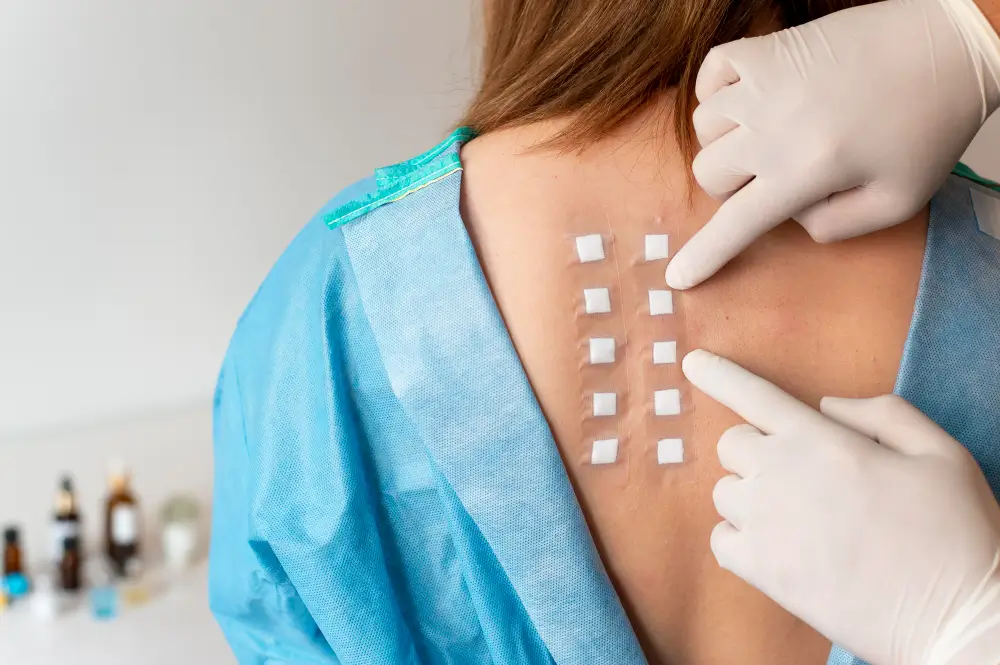
Patch testing is used to identify delayed allergic skin reactions, known as allergic contact dermatitis. If you develop red, itchy rashes days after using certain products such as lotions, cosmetics, detergents, jewelry, or workplace materials your immune system may be reacting to a specific ingredient. Patch testing helps identify the exact substance causing your skin reaction so it can be avoided.
How It Works / What to Expect?
Patch testing is non-invasive and needle-free and takes place over several days.
Small adhesive patches containing common allergens are placed on your upper back
The patches remain in place for 48 hours to allow delayed reactions to develop
You return for scheduled readings to check for skin reactions
Mild itching may occur, but the process is generally comfortable and safe
This testing detects delayed immune reactions caused by T-cells, not immediate IgE-based allergies.
Types of Testing
Multi-day patch testing using standardized allergen panels
Allergens commonly tested include metals, fragrances, preservatives, dyes, rubber, and chemicals found in everyday products
Skin reactions are evaluated at multiple time points to ensure accuracy
This test is not a general allergy screening and is specifically designed for skin-related allergic reactions.
Why This Service Matters?
Without identifying the true trigger, skin rashes often continue despite changing products or treatments. Patch testing:
Identifies the exact allergen causing the reaction
Eliminates guesswork and repeated flare-ups
Prevents long-term skin inflammation
Helps restore the skin barrier and improve healing
Knowing the cause allows for targeted avoidance and long-term symptom control.
If you are dealing with persistent rashes or eczema that do not improve, patch testing may provide the answers you’ve been missing. Identifying and avoiding the right trigger can make a lasting difference in your skin health.