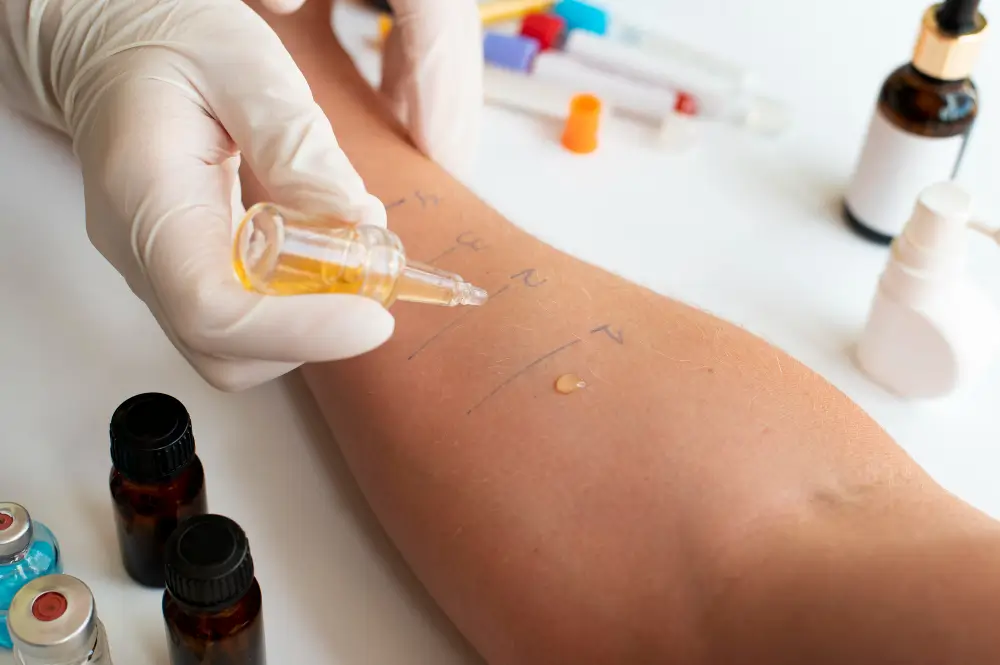
Food allergy testing helps determine whether symptoms such as hives, vomiting, swelling, or breathing difficulty are caused by a true food allergy. A food allergy occurs when the immune system overreacts to a food protein and produces IgE antibodies, leading to reactions that can range from mild to severe. Testing provides clarity, helps ensure safety, and prevents unnecessary food restrictions.
How Food Allergy Testing Works?
- Small amounts of specific food allergens are evaluated using skin or blood testing
- The immune system’s IgE response is measured
- A reaction helps identify foods that may be causing symptoms
- Results are interpreted in the context of symptoms and medical history
Steps/Types of Food Allergy Testing
- Skin Prick Testing to specific food reagents.
- Blood Test- IgE to specific foods are measured if available through blood work.
- Oral Food Challenge is the gold standard to determine if a patient has outgrown a food allergy. It is performed under close medical supervision with small, gradually increasing amounts of the food are consumed
- Confirms or rules out a food allergy when results are unclear or outgrowing is suspected
Who Should Get Food Allergy Testing?
- Food allergy testing may be recommended if:
- You or your child has had reactions after eating certain foods
- A child has moderate to severe eczema
- Foods are being avoided without a confirmed diagnosis
- You want to know if a known food allergy has been outgrown
Why Food Allergy Testing Matters?
- Identifies foods that truly cause allergic reactions
- Prevents unnecessary dietary restrictions
- Reduces the risk of severe allergic reactions
- Supports safe food introduction in infants and children
- Provides confidence and clarity around food choices
Food allergy testing provides clear answers and peace of mind for individuals and families dealing with food-related concerns. By identifying true allergies and confirming which foods are safe, testing supports informed decisions, safer eating, and an improved quality of life.