

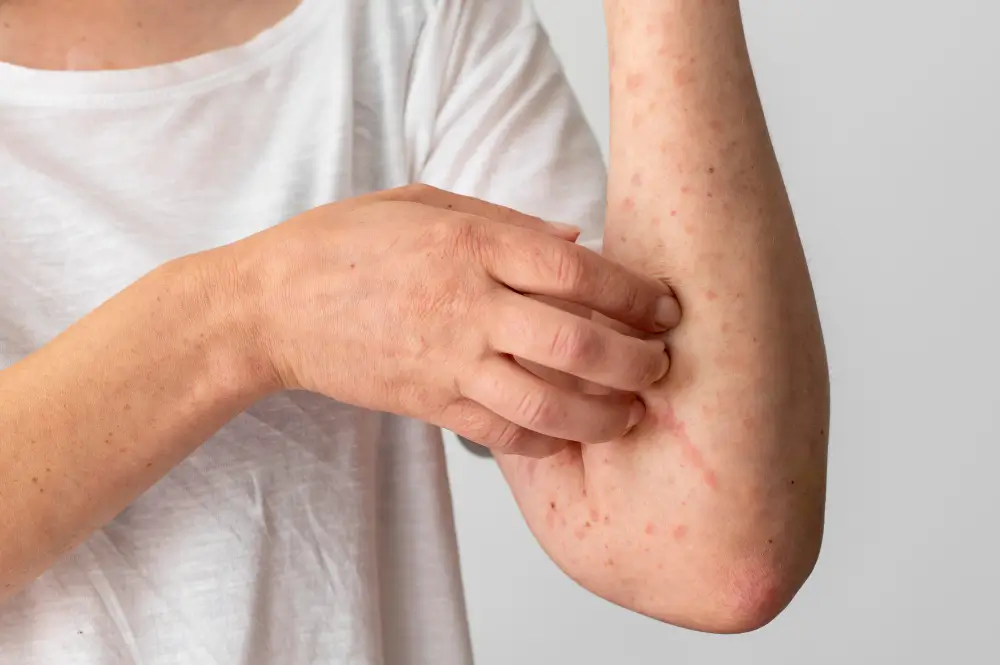
Contact Dermatitis
What It Is?
When the skin comes into direct contact with something that irritates it or causes an allergic reaction, it can result in contact dermatitis, an itchy and occasionally severe skin rash.
The rash may appear immediately or develop over several days, depending on the type of trigger. Anyone can be affected by this illness, which could become chronic if the allergic or irritating substance is not identified and avoided.
Common Symptoms
- Red rash or bumps
- Excessive itching
- Dry, cracked, or scaly skin
- Blisters that may ooze or crust
- Swelling or tenderness
- The feeling of burning or stinging
Triggers and Causes
Irritant triggers:
- Soaps, detergents, and cleaning products
- Bleach, solvents, and disinfectants
- Hair dyes or chemical treatments
- Skincare or exfoliating products
- Certain plants, including citrus and nettles
Allergic triggers:
- Nickel in jewelry, belt buckles, or clothing buttons
- Fragrances in lotions, perfumes, soaps, and shampoos
- Preservatives in cosmetics or skincare products
- Rubber or latex gloves
- Adhesives in bandages or medical tapes
- Poison ivy, poison oak, or poison sumac
- Certain topical medications or ointments
When to See a Specialist?
You should consider seeing a specialist if the rash is severe, painful, sudden, or widespread, especially if it affects your face or private areas.
If the rash does not fade in a few weeks, if the symptoms make it difficult for you to sleep or go about your everyday business, or if you are not sure what caused the rash, you should also seek medical help. Rashes that are persistent or recurrent frequently need to be evaluated by a specialist.
How do we help?
We perform patch testing, a diagnostic technique that involves applying tiny amounts of possible triggers to the skin in order to identify particular allergens. This allows us to determine the exact cause of your symptoms. Once these triggers have been identified, we help you avoid these triggers by suggesting alternative products.
Treatment may include prescription topical medications to reduce inflammation and soothe discomfort. In order to avoid further flare-ups, we also advise you on how to preserve the skin barrier.